Skip to content
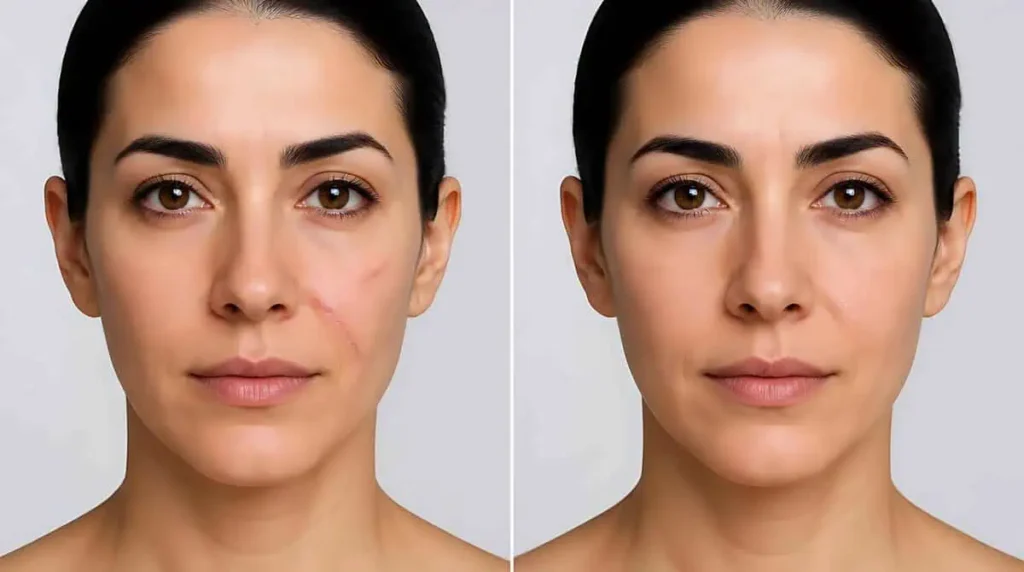
Table of Contents
Do you have a scar that has stuck around for years and feels like a permanent fixture? Once you start looking into fixing it, two paths tend to come up: laser and surgery. Choosing between them is less about which treatment is better in general and more about which one suits your specific scar and skin.
At 1aesthetic, we offer both laser and surgical scar revision treatment for patients across Hoboken and Weehawken, NJ. So the real question is not which method wins on paper, but which one fits the scar in front of us.
Which is better for scar revision, laser or surgery?
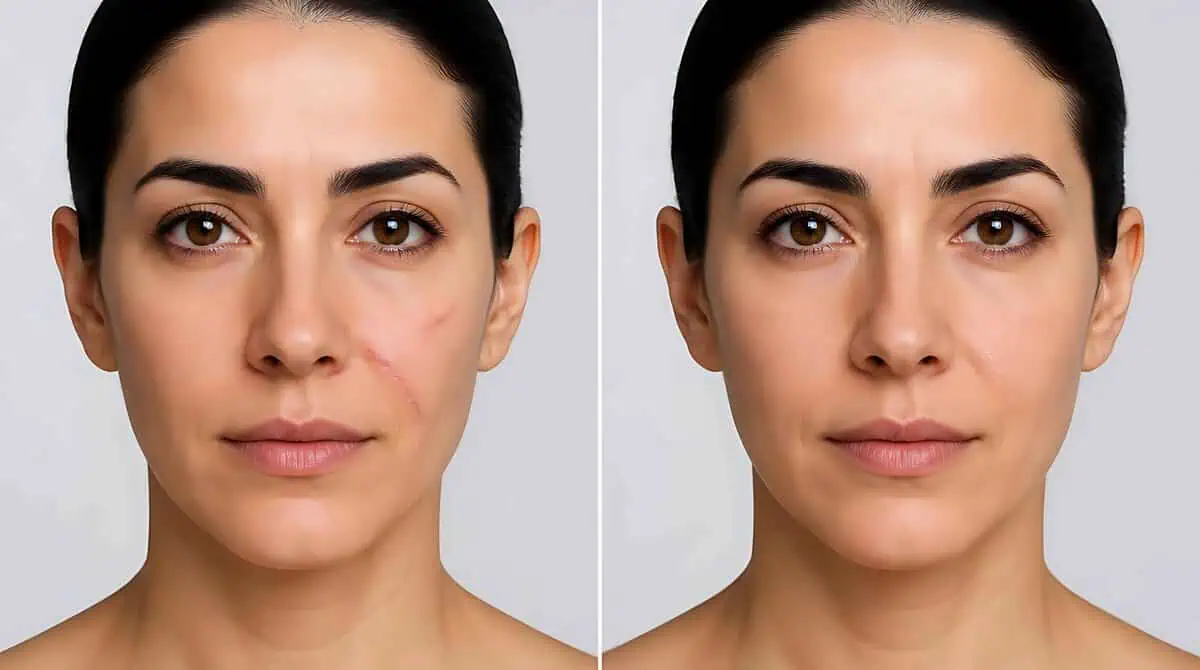
Laser scar revision resurfaces the skin to smooth texture and even out color, which makes it a strong fit for flatter, discolored scars. Surgical scar revision physically removes or repositions a raised, wide, or poorly placed scar, and it is often the better option when resurfacing alone would not significantly improve the scar.
What is Laser vs Surgical Scar Revision?
Laser and surgical scar revision solve the same problem in two very different ways.
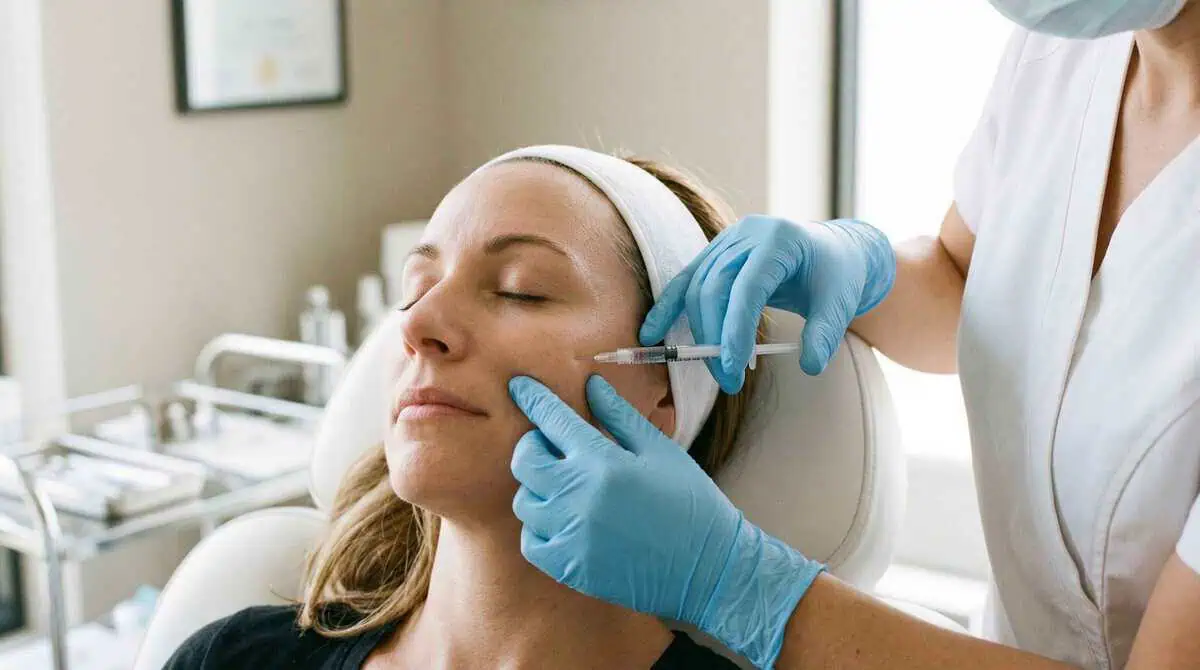
Laser scar revision resurfaces the skin, delivering focused laser light that breaks down scar tissue and prompts collagen remodeling, which smooths texture and evens out color over time. Surgical scar revision takes a more physical approach, removing or repositioning the scar and then closing the area so the new mark is finer and less noticeable.
The plainest way to understand the difference is this: laser reworks the scar you already have, while surgery replaces it with a smaller, better-placed one. It helps to set expectations up front. Neither option erases a scar. Both aim to make it far less obvious, and the extent of improvement you see depends on the scar and how your skin heals.
What Does Laser Scar Revision Do Best?
Laser scar revision works best for flatter scars where the main issues are color, texture, or surface irregularity. That covers a lot of everyday scarring, including:
- Many acne scars
- Some surgical and injury scars
- Certain stretch marks
Because it uses focused laser light rather than an incision, laser treatment is minimally invasive, appealing to patients who want to improve a scar without surgery. Treatment is typically spread across a few sessions, with improvement building gradually as the skin heals and regenerates.
In some cases, a provider may suggest adding steroid injections alongside laser work to help refine the result. One factor shapes laser candidacy more than most people expect: skin tone, which the candidacy section below covers in detail.
What Does Surgical Scar Revision Do Best?
Surgical scar revision is better suited to raised, thick, wide, or tethered scars, and to scars sitting in an awkward or high-tension spot on the body. While laser reshapes tissue at the surface, surgery directly removes the old scar and re-closes the area to produce a thinner, better-oriented result.
For a scar that is simply too pronounced for resurfacing to change it meaningfully, surgery is often the more direct answer. It is also common for surgical revision to be one step in a larger plan. In some cases, laser treatment is used afterward to refine the fresh scar once it has healed, so the two approaches can work together rather than compete.
How to Tell Which One Fits Your Scar?
The choice usually comes down to how your scar actually looks and feels. A few general patterns tend to hold:
- A flat, discolored, or textured scar often points toward laser as the starting option.
- A raised, wide, pulling, or poorly positioned scar often makes surgery the stronger candidate.
- A newer scar is usually watched rather than treated, since revision is generally considered once a scar has matured and settled.
The right choice depends on the specific scar a provider is looking at. Two people with acne scars can easily land on different plans because their scars, skin, and goals are not the same.
Is Your Skin a Good Candidate for Laser?
Good candidates for laser scar revision typically have non-active acne scars, surgical scars, or injury scars, along with stable scar tissue and no active skin infection. Overall skin health plays a role too, since the skin needs to heal and regenerate well for the treatment to do its job.
Skin tone is a key part of the assessment. Different skin types respond differently to laser light, so providers use the Fitzpatrick scale, a classification from I (very fair) to VI (very dark), to guide which laser and which settings are safe and effective for a given patient.
Not every scar or skin type suits every laser, and matching the device to the person is what keeps treatment both safe and worthwhile. Sun protection before and after treatment supports your results and lowers the risk of pigment changes, so daily SPF becomes part of the plan.
How Does a Consultation Settle the Question?
The honest answer to which option is right for you comes from an in-person assessment, not a photo or an article. During a consultation, a provider looks at your scar type, size, location, and age together with your skin tone, then talks through which of the options for scar removal fits your situation and goals.
Candidacy for laser and surgery is confirmed face-to-face because the details that determine it are hard to judge any other way. You do not have to figure this out alone, and you do not have to commit to anything before you understand what each path involves.
Ready to Find the Right Option for Your Scar?
If a scar has been bothering you and you are ready for a clear answer, our team, offering scar revision treatment in Hoboken and Weehawken, NJ, can help you understand your options and what to realistically expect from each. Schedule your consultation now and start your journey to clearer, healthier skin.